

Recovering from Bulimia: A Compassionate, Evidence-Based Path Toward Healing from a Haddonfield Eating Disorder Therapist

By: Gabrielle Morreale M.A. LPC.

If you are reading this, you or someone you love may be struggling with bulimia. First, take a breath. Recovery is possible. Healing is not linear, but it is attainable.
What Is Bulimia?
Bulimia nervosa is an eating disorder characterized by recurrent episodes of binge eating followed by compensatory purging behaviors such as self-induced vomiting, misuse of laxatives, fasting, or excessive exercise. It happens on average one time per week over a period of 3 months. These behaviors are often driven by intense shame, fear of weight gain, and a distorted body image.
Binge episodes typically involve consuming an uncomfortable amount of food in a short period of time, accompanied by a sense of loss of control and feelings of guilt. The subsequent purging or compensatory behavior is often an attempt to alleviate anxiety, guilt, or perceived “damage.” Unfortunately, this cycle reinforces itself neurologically and emotionally, making it often difficult to stop without intervention.
Bulimia is not about vanity. It is not about lack of willpower. It is a complex mental health condition involving biological vulnerability, emotional regulation challenges, trauma history, perfectionism, and sociocultural pressures. It can impact anyone. It affects individuals of all genders, body sizes, ages, and backgrounds.
According to the National Eating Disorders Association, early intervention significantly improves outcomes. Reaching out for help is brave and often the first step to healing!
The Therapeutic Lens: Understanding the Function of the Behavior
As an eating disorder therapist treating, bulimia nervosa, we do not simply try to “stop the behavior.” Instead, we explore what the behavior and how it maybe be “serving” you.
Bingeing and purging often function as:
Emotional regulation strategies
Attempts to numb distress
Coping mechanisms for life stressors or trauma
Methods of exerting control when life feels chaotic
Ways to manage shame or self-criticism
When viewed through a compassionate lens, we remove the shame and can see the bulimia for what it often feels like…survival. Therapy gently works to replace that feeling and ways of coping with healthier, sustainable skills.
Evidence-Based Treatment for Bulimia
1. Cognitive Behavioral Therapy (CBT)
Cognitive Behavioral Therapy is considered the “gold standard” treatment for bulimia recovery. CBT helps individuals:
Normalize eating patterns
Reduce binge-purge behaviors
Challenge distorted body image beliefs
Identify triggers and interrupt the cycle
CBT focuses on establishing structured, consistent meals to reduce physiological deprivation — a key factor in reducing binge episodes.
2. Dialectical Behavior Therapy (DBT)
Dialectical Behavior Therapy is particularly helpful when bingeing and purging are linked to intense emotions. DBT teaches:
Distress tolerance
Emotion regulation
Interpersonal effectiveness
Mindfulness skills
Many individuals with bulimia struggle with emotional intensity. DBT offers tools to tolerate distress without turning to symptoms.
3. Nutritional Counseling
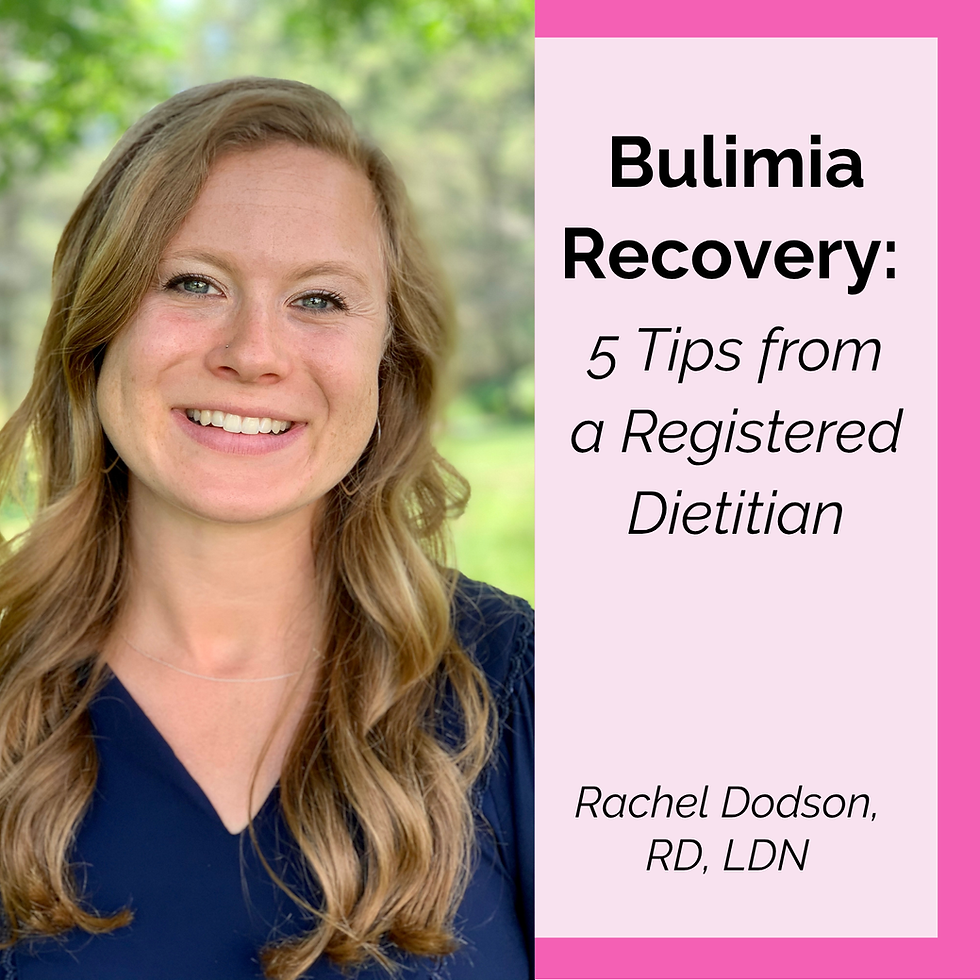
Working with a registered dietitian trained in eating disorders is essential. Structured, adequate nutrition reduces biological vulnerability to bingeing. Food can be healing in recovery. At Recovered and Restored our RD Rachel will help you break the binge purge cycle. She has extensive experience treating individuals with bulimia and would be honored to walk along side you.
4. Trauma-Informed Therapy
For some, bulimia is intertwined with unresolved trauma. Modalities such as Brainspotting, EMDR, somatic therapies, or attachment-based work can address deeper root causes when appropriate. I personally am phase 1 trained in brain spotting therapy as well as trauma-informed care so we can do the deeper work together. Or our incredible clinician Bree is trained in EMDR. Additionally, our whole team is trained in trauma informed care and is equipped to help you navigate the pain of the past to promote the healing of tomorrow. Learn more about us here!
Coping Skills for Bulimia Recovery
Recovery requires replacing the binge-purge cycle with healthier regulation strategies. This takes time. Please remember to be gentle with yourself, you are doing your best! Here are a few compassionate, practical coping skills I share with clients as a recovered eating disorder therapist:
1. Structured Eating
Eating every 3–4 hours helps to stabilize blood sugar and reduces urges to binge. Even if hunger cues feel unreliable, consistent nourishment is foundational.
2. Urge Surfing
Urges rise, peak, and fall like waves. Set a timer for however long you can and observe the urge without acting on it. Often, the intensity decreases.
3. Self-Compassion Practice
Replace harsh inner dialogue with gentle truth. Instead of:“I have no control.”Try:“I am learning new ways to cope.”
Research shows self-compassion reduces shame — a central driver in bulimia. Here is a blog on self compassion! https://www.recoveredandrestoredtherapy.com/post/progress-over-perfection
The Emotional Work of Recovery
Recovering from bulimia is not only behavioral; it is relational and emotional. Many individuals in bulimia recovery must grieve:
The illusion of control
The identity built around the disorder
Years lost to secrecy
Therapy provides a safe space to process shame, perfectionism, and fear of weight changes. Weight restoration or stabilization may occur, and that can feel frightening. Compassionate providers support body neutrality rather than toxic positivity.
The goal is not loving your body overnight. The goal is reducing harm and increasing peace. You are worthy of peace with your mind and your body!
When to Seek Higher Levels of Care
If medical instability, daily binge-purge cycles, suicidal ideation, or electrolyte imbalances are present, higher levels of care (intensive outpatient, partial hospitalization, or residential treatment) may be necessary. Bulimia can carry serious medical risks, including cardiac complications.
A physician, therapist, and dietitian working collaboratively provide the strongest recovery outcomes. Here is a list of additional providers we often refer to if more support maybe needed.
A Gentle Reminder
Bulimia thrives in secrecy. Healing grows in connection.
You are not “too much.” You are not broken. Your bulimia may feel like “safety”.
And now, you deserve new ones.
Recovering from bulimia takes courage, support, and patience. With evidence-based treatment for bulimia and compassionate therapeutic care, freedom from the binge-purge cycle is possible.
If you are ready to begin bulimia recovery, consider reaching out to our team!
Healing is not about perfection. It is about progress, nourishment, and reclaiming your life — one steady step at a time. You’ve got this!!
Other Mental Health Services Offered in PA, NJ, DE, SC, MD, CT, VT, and FL
We offer a wide variety of services related to eating disorder recovery including trauma therapy! We offer Weekly Support Groups, Nutrition Services, and Family and Parent Therapy as well as Coaching, all tailored to meet the specific needs of the individual. We offer our services for Anorexia, Bulimia, Binge Eating, and Orthorexia as well as Maternal Mental Health, and eating disorder therapy for athletes online in New Jersey, Delaware, South Carolina, Maryland, Florida, Vermont, and Connecticut! We are here to offer our support and understanding in a safe and non-judgmental environment.
We have immediate openings right now for eating disorder therapy in:
And recovery coaching worldwide.
Recovered and Restored is an eating disorder therapy center founded by Gabrielle Morreale, LPC. We specialize in helping teens and young women heal from eating disorders such as anorexia, bulimia, orthorexia, and binge eating disorder and treat disordered eating, anxiety, depression, and PTSD. We provide eating disorder therapy in PA in the towns of Horsham, Upper Gwynedd, Lower Gwynedd, North Wales, Lansdale, Hatfield, Blue Bell, Doylestown, and nearby towns with eating disorder therapy. Also providing virtual eating disorder therapy in New Jersey, Delaware, and Florida. Some towns served virtually include but are not limited to Pittsburgh, Lancaster, Harrisburg, Center City, Cherry Hill, Haddonfield, Mount Laurel, Cape May, Avalon, Brick, Dover, New Castle, Bethany Beach, Marydel, and Oceanview

Gabby is the Owner and Clinical Director of Recovered & Restored Eating Disorder Therapy Center.
Her journey as a clinician began 10 years ago, after receiving her Master's Degree in counseling psychology from Rosemont College in Bryn Mawr. Since then, she has continued her education and received her clinical license in Pennsylvania, New Jersey, Delaware, Connecticut, Maryland, South Carolina, Vermont, and Florida. Additionally, she has a certificate in cognitive behavioral therapy, dialectical behavioral therapy, and trauma-informed care. Gabby also recently received formal training in exposure response prevention through the CBT school and feels confident about treating both eating disorders, OCD, and perinatal mental health issues. She is also fully recovered from anorexia and is an IVF warrior and is honored to take part in your healing journey. She’s been there, she gets it!
Gabby is an eating disorder therapist and HAES provider who specializes and is deeply passionate about helping teens and young women heal from their eating disorders. She works with both teens and women suffering from anorexia, bulimia, orthorexia, and binge eating disorder. She also treats maternal mental health disorders as well as those struggling with infertility, disordered eating, anxiety, and PTSD.
She is a mom, wife, and aunt. She spends most of her free time with her daughters, husband, and family, especially her daughters and niece Caia who are the sparkles of her world! She is obsessed with all things glitter and loves the beach. In the winter months when she isn’t at the beach, she enjoys playing with her dog, cooking, shopping, working out, and watching a good home improvement or reality show.


Comments