

The Best Eating Disorder Definition

Updated: Jan 16
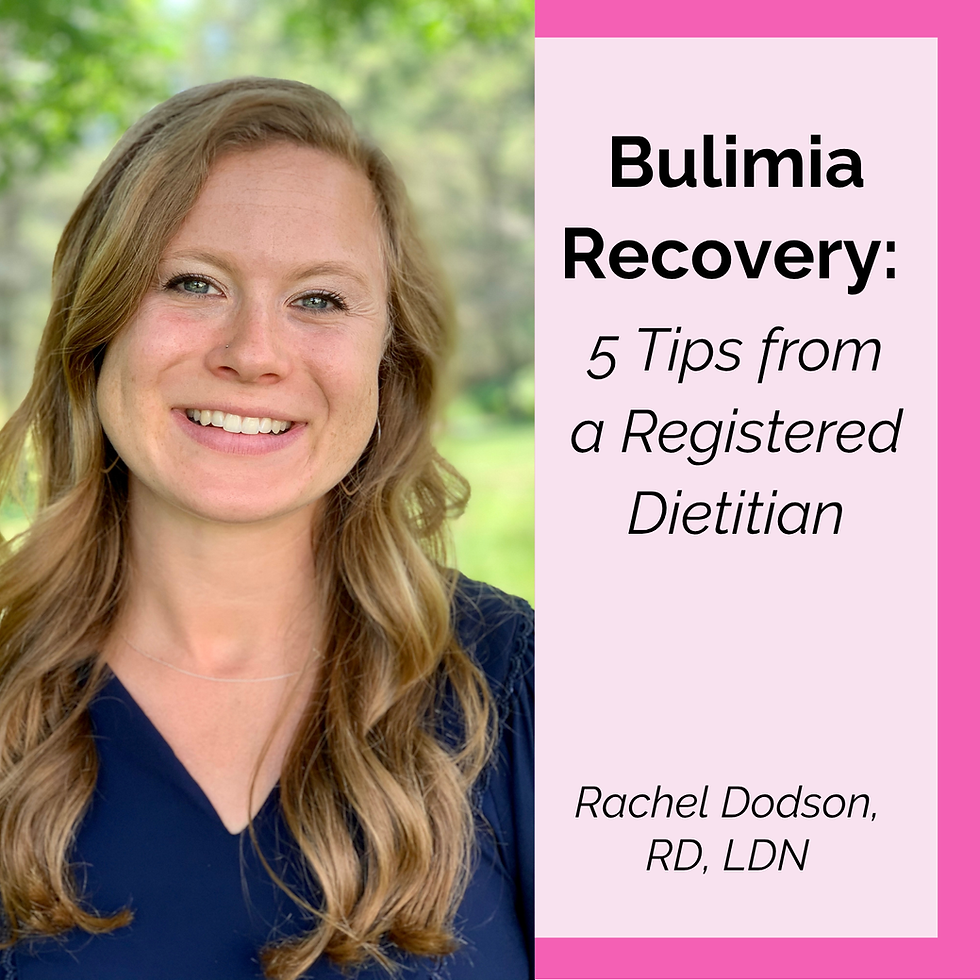
Rachel Dodson, RD, LDN

We live in a time marked by information-overload, and we are saturated with content. We have access to so much information all the time. The amount of information can be overwhelming and often hard to sift through when you are trying to find concrete answers. In this blog, I want to give you what I think is the best eating disorder definition. There is so much confusion and many questions like, “how do you know if it’s an eating disorder,” or “how can you tell the difference between an eating disorder and disordered eating,” or “who can diagnose an eating disorder?”
What is an Eating Disorder?
Let’s first define an eating disorder. It’s important to note that anyone can have an eating disorder. They affect people of all genders, ages, socioeconomic backgrounds, ethnicities, shapes and sizes. Eating disorders are serious illnesses known by severe disturbances in someone’s eating behaviors. Eating disorders are life-threatening mental illnesses, not choices. Eating disorders are associated with psychological impairment, significant comorbidities, medical complications, and nutrient deficiencies. Signs and symptoms of an eating disorder can vary but may include mood swings, fatigue, hair loss, unusual sweating, unexplained weight changes, GI issues, dieting, withdrawing from friends or social activities, fixations on body shape, and/or food rituals.
How is an Eating Disorder Diagnosed?
An eating disorder diagnosis will come from a medical and/or mental health professional, which can include licensed professional counselors (LPC), licensed clinical social workers (LCSW), licensed psychologists, and healthcare providers, including medical doctors, nurse practitioners, or physician's assistants.
When diagnosing, health professionals use the diagnostic criteria found in the Diagnostic and Statistical Manual of Mental Disorders, 5th Edition (DSM-5) by the American Psychiatric Association. The DSM-5 lists the following eating/feeding disorders: anorexia nervosa (AN), bulimia nervosa (BN), avoidant/restrictive food intake disorder (ARFID), other specified feeding or eating disorder (OSFED), binge eating disorder (BED), pica, and rumination disorder.
According to the Pocket Guide to Eating Disorders, 3rd Ed. by Jessica Setnick MS, RD, CEDS-C, it is difficult to define when an eating disorder starts. “Age of onset” usually means age at diagnosis, but the dysfunctional eating behaviors could have been happening for years prior to any diagnosis. The specific cause of an eating disorder is unknown but research shows that genetics, brain biology, cultural and social ideals, and underlying mental health conditions can all lead to the development of an eating disorder.
In the book, How to Nourish Yourself Through an Eating Disorder by Wendy Sterling, MS, RD, CSSD, CEDS-S and Casey Crosbie, RD, CEDS-S, authors give a helpful “Spectrum of Eating Behavior” that breaks down simply the differences between an eating disorder, disordered eating, and optimal nutrition:
Optimized nutrition: safe, supported, purposeful, and individualized nutrition practices that best balance health and performance.
Disordered eating: problematic eating behavior that fails to meet the clinical diagnosis for an eating disorder
Eating disorder: behavior that meets DSM-5 diagnostic criteria for a feeding and eating disorder
For someone to be diagnosed by a healthcare provider with an eating disorder, they must meet the diagnostic criteria listed in the DSM-5. If someone’s symptoms and experiences align with the criteria defined by the American Psychiatric Association, they would be diagnosed with an eating/feeding disorder. Someone experiencing disordered eating may exhibit eating patterns and experience psychological distress similar to someone with an eating disorder, but they do not meet the frequency, duration and/or level of psychological impairment thresholds needed for diagnosing an eating disorder as defined by the American Psychiatric Association.
Eating disorders and disordered eating can have a negative impact on someone’s everyday life and functioning. I often find that clients can experience a fear and hesitation in recovery due to not feeling “sick enough.” But I will remind clients that no matter what symptoms they may or may not be currently experiencing, if your relationship with food and/or your body is hindering you and getting in the way of you living a full and abundant life, you can get help. Despite eating concerns falling short of a diagnosis, they still deserve attention and treatment. Even without a diagnosis, disordered eating comes with its own set of health risks and could turn into an eating disorder in the future. If you are struggling to get to that place of optimized nutrition, we encourage you to reach out! There is no one size fits all for eating disorder recovery, but anyone struggling is worthy of getting help!
References:
Pocket Guide to Eating Disorders, 3rd Ed. (eBook) Jessica Setnick, MS, RD, CEDS-C
Sick Enough: A Guide to the Medical Complications of Eating Disorders by Dr. Jennifer Guadiani
How to Nourish Yourself Through an Eating Disorder by Wendy Sterling, MS, RD, CSSD, CEDS-S and Casey Crosbie, RD, CEDS-S
https://www.nimh.nih.gov/health/topics/eating-disorders#hts-intro
https://www.eatright.org/health/health-conditions/eating-disorders/what-is-disordered-eating
https://my.clevelandclinic.org/health/diseases/4152-eating-disorders
Other Mental Health Services Offered in PA, NJ, DE, SC, MD, CT, VT, and FL
We offer a wide variety of services related to eating disorder recovery including trauma therapy! We offer Weekly Support Groups, Nutrition Services, and Family and Parent Therapy as well as Coaching, all tailored to meet the specific needs of the individual. We offer our services for Anorexia, Bulimia, Binge Eating, and Orthorexia as well as Maternal Mental Health, and eating disorder therapy for athletes online in New Jersey, Delaware, South Carolina, Maryland, Florida, Vermont, and Connecticut! We are here to offer our support and understanding in a safe and non-judgmental environment.
We have immediate openings right now for eating disorder therapy in:
And recovery coaching worldwide.
Recovered and Restored is an eating disorder therapy center founded by Gabrielle Morreale, LPC. We specialize in helping teens and young women heal from eating disorders such as anorexia, bulimia, orthorexia, and binge eating disorder and treat disordered eating, anxiety, depression, and PTSD. We provide eating disorder therapy in the towns of Horsham, Upper Gwynedd, Lower Gwynedd, North Wales, Lansdale, Hatfield, Blue Bell, Doylestown, and nearby towns with eating disorder therapy. Also providing virtual eating disorder therapy in New Jersey, Delaware, and Florida. Some towns served virtually but are not limited to Pittsburgh, Lancaster, Harrisburg, Center City, Cherry Hill, Essex County, Haddonfield, Mount Laurel, Cape May, Avalon, Brick, Dover, New Castle, Bethany Beach, Marydel, and Oceanview

Eating Disorder Dietitian and Meal Coach
Rachel graduated from West Chester University, Honors College XVI with a Bachelor’s degree in Nutrition and Dietetics in 2018. She completed her dietetic internship at Immaculata University in 2020 and graduated with her Master’s degree in Clinical Nutrition from Immaculata in 2022.
Rachel is a non-diet dietitian who believes in intuitive eating and is a HAES (Health At Every Size) provider. She is passionate about walking alongside her clients as they seek to heal their relationship with food and their bodies, and re-discover the joy of eating! Rachel works with both teens and women suffering from eating disorders, disordered eating, and other nutrition-related conditions.
Rachel has extensive experience treating eating disorders and is personally recovered from disordered eating. Being on the other side of that battle, she wants to help others quiet all the noise, no matter what season of life they’re in. She became a registered dietitian to help others on their own path to discovering freedom with food, exercise, and nutrition. Rachel offers fully virtual online nutritional counseling sessions in PA, NJ, MD, SC, DE, AL, and FL, and coaching worldwide.
Rachel loves to spend her spare time with her friends and family, including her siblings and their kiddos! In her free time, Rachel is most likely grabbing a coffee with a friend or is on a walk listening to her favorite podcasts. She loves to ride her bike, read, watch romcoms, and bake cookies.


Comments