

Bulimia Recovery: 5 Tips From a Registered Dietitian

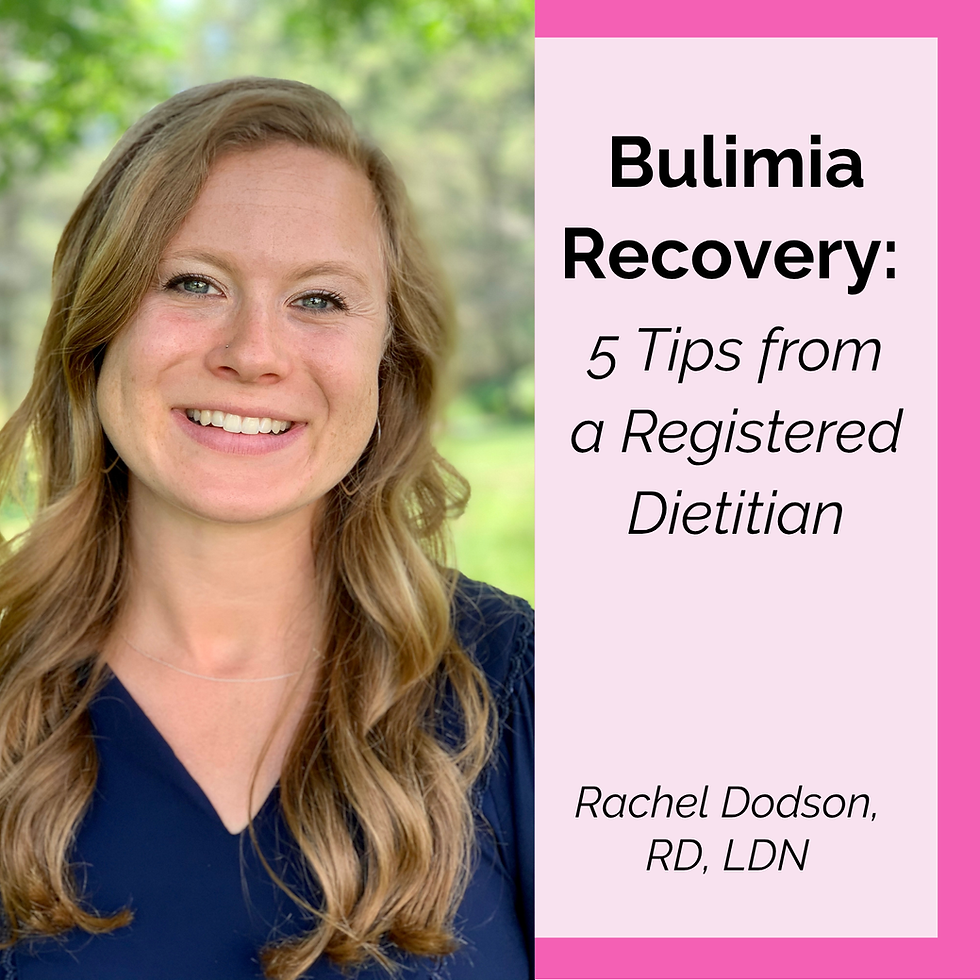
Written by Rachel Dodson, RD, LDN
Rachel is an eating disorder dietitian and meal coach who works with teens and women experiencing eating disorders and disordered eating. She provides virtual nutrition counseling and uses a non-diet, Health at Every Size-informed approach.
Like any eating disorder, struggling with Bulimia can feel like a never-ending battle. It is crucial to pursue healing from Bulimia with a comprehensive treatment team that includes, but is not limited to, a dietitian, a therapist, and a medical doctor. Each of these will play a crucial role in helping you recover, because they each have a different area of expertise. As a Registered Dietitian, I’m going to offer some guidance on what healing from bulimia means.
Bulimia recovery usually involves medical care, therapy, and nutrition support. From a nutrition perspective, recovery may include eating consistently, following an individualized meal plan, learning to tolerate fullness, managing digestive discomfort, and sharing meals more often with others. A registered dietitian who specializes in eating disorders can help make these changes safely and gradually.
What is Bulimia Nervosa?
Bulimia Nervosa (BN) is characterized by a cycle of bingeing and compensatory behaviors “to undo” or “make up for” the effects of binge eating. Someone who is stuck in this cycle may also be struggling with distress around tolerating fullness after eating and feeling out of control around food, leading to increased feelings of guilt and shame. Bulimia is diagnosed by the following criteria per the DSM-5-TR:
Recurrent episodes of binge eating, which are characterized by:
Eating, in a discrete period of time, an amount of food that is evidently larger than what most individuals would eat in a similar period of time under similar circumstances. This episode is marked by one lacking a sense of control over what or how much is being eaten.
Recurrent inappropriate compensatory behaviors in order to prevent weight gain, which could include self-induced vomiting; misuse of laxatives, diuretics, or other medications; fasting; or excessive exercise.
The binge eating and inappropriate compensatory behaviors both occur at least once a week for 3 months on average.
Self-evaluation is excessively influenced by body size/weight.
The disturbance does not occur exclusively during episodes of anorexia nervosa.
How Does Bulimia Affect the Body?
Builmia can take a major toll on the body. Health consequences of Bulimia can include but are not limited to electrolyte imbalances, dental and esophageal problems, heart and kidney complications, and hormonal imbalances.
Now that we know what Bulimia is and we know some of the ways it can negatively affect the body… what can you do practically in recovery?
5 Practical Tips from a Registered Dietitian When Healing from Bulimia
Tip 1: Practice Tolerating The Discomfort Of Feeling Full
The feeling of fullness is complex and can be triggering for so many in recovery, especially for those struggling with Bulimia. It’s important to remember feeling full is a temporary feeling. It can be uncomfortable and challenging, but the feeling will go away without you doing anything because that is how your body naturally works! Part of being human is feeling your fullness, but remind yourself that your body will digest the food. Your therapist is a great resource to discuss ways you can distract yourself after a meal or to work on how to mindfully sit with fullness to avoid using symptoms when recovering from Bulimia.
Tip 2: Acknowledge That Physical Changes Occur When You Eat
When we eat food we will experience temporary physical changes - your belly did not have food in it and now it does! That is how the digestive system works - food will sit in your stomach for a short period of time, and then the food will make its way to your intestines. As your body digests food, waste is created and nutrients are absorbed. We need nutrients to live and breathe and walk and laugh - and you can trust your body to navigate the digestive process! Your body is smart - you can trust that it knows how to do the things it was created to do, like digesting the food you eat.
Tip 3: Eat With Others For Accountability

Sharing a meal or snack with others is not only helpful accountability to avoid using compensatory behaviors after eating, it can also make the eating experience more enjoyable! We need to eat in order to fuel our bodies to function properly, but eating is also an opportunity to spend time with the people we love. If you are struggling with Bulimia, schedule meals throughout the week with family and friends - you don’t have to do this alone!
Tip 4: Utilize Liquid Nutrition When Needed
During the recovery process, it is very common to experience digestive issues. Please consult your doctor and determine if seeing a GI doctor would be a good fit for you. Often in recovery, you may experience gastroparesis, or slow digestion. If you are skipping meals or not eating adequately enough for your body, the muscles in your intestines are not used to being used and digestion often slows down. When our digestion slows, we may not feel our physical hunger cues, but that does not change the fact that you still need to eat. You can’t solely rely on your hunger/fullness signals early in recovery because you are still relearning your body’s signals and getting back to a place of safety. Eating enough, eating consistently, and following your meal plan is one of the best ways for your digestion to work its way back to a normal pace and to relearn what hunger/fullness feels like in your body. Utilizing liquid nutrition supplements or making nutrient dense smoothies can aid in digestive discomfort since your body doesn’t need to work as hard to break them down. Speak with your registered dietitian and see how these can fit into your individualized meal plan.
Tip 5: Work With a Registered Dietitian To Create Your Meal Plan Rhythm
There is no one size fits all in eating disorder recovery. There are general nutrition guidelines in eating disorder recovery, such as eating at least 3x/day and including all of the macronutrients at meal times. But, there are also very personal factors like someone’s schedule, life stage, history, triggers, and genuine taste preferences that also need to be taken into consideration in recovery. This is where working with an eating disorder registered dietitian is so helpful because their job is to give you guidance with meals in order to help YOU thrive on your recovery journey, no matter where you are starting! An eating disorder registered dietitian can help get your physical body nourished and help you relearn how to enjoy food again.
References and other helpful resources:
The Academy of Nutrition and Dietetics Pocket Guide to Eating Disorders, 3rd Ed.
Other Mental Health Services Offered in PA, NJ, DE, SC, MD, CT, VT, and FL
We offer a wide variety of services related to eating disorder recovery including trauma therapy! We offer Weekly Support Groups, Nutrition Services, and Family and Parent Therapy as well as Coaching, all tailored to meet the specific needs of the individual. We offer our services for Anorexia, Bulimia, Binge Eating, and Orthorexia as well as Maternal Mental Health, and eating disorder therapy for athletes online in New Jersey, Delaware, South Carolina, Maryland, Florida, Vermont, and Connecticut! We are here to offer our support and understanding in a safe and non-judgmental environment.
We have immediate openings right now for eating disorder therapy in:
And recovery coaching worldwide.
Recovered and Restored is an eating disorder therapy center founded by Gabrielle Morreale, LPC. We specialize in helping teens and young women heal from eating disorders such as anorexia, bulimia, orthorexia, and binge eating disorder and treat disordered eating, anxiety, depression, and PTSD.

Eating Disorder Dietitian and Meal Coach
Rachel graduated from West Chester University, Honors College XVI with a Bachelor’s degree in Nutrition and Dietetics in 2018. She completed her dietetic internship at Immaculata University in 2020 and graduated with her Master’s degree in Clinical Nutrition from Immaculata in 2022.
Rachel is a non-diet dietitian who believes in intuitive eating and is a HAES (Health At Every Size) provider. She is passionate about walking alongside her clients as they seek to heal their relationship with food and their bodies, and re-discover the joy of eating! Rachel works with both teens and women suffering from eating disorders, disordered eating, and other nutrition-related conditions.
Rachel has extensive experience treating eating disorders and is personally recovered from disordered eating. Being on the other side of that battle, she wants to help others quiet all the noise, no matter what season of life they’re in. She became a registered dietitian to help others on their own path to discovering freedom with food, exercise, and nutrition. Rachel offers fully virtual online nutritional counseling sessions in PA, NJ, MD, SC, DE, AL, and FL, and coaching worldwide.
Rachel loves to spend her spare time with her friends and family, including her siblings and their kiddos! In her free time, Rachel is most likely grabbing a coffee with a friend or is on a walk listening to her favorite podcasts. She loves to ride her bike, read, watch romcoms, and bake cookies.


Comments